
March 2026
CGA Monthly
We’re building something.
At the CGA, we're not afraid of a good idea. Last year, we heard some smart people say that it'd be really helpful if creators who couldn't afford a lawyer had some way of protecting themselves and their work. So we put some creators and some lawyers in a room, and they put together the CGA Rider, foundational contract language that any creator can use to make sure that they're treated fairly. The CGA Rider has now been downloaded more than 10,000 times.
For a while we've been listening to some other smart people talk about the future. Increasingly, this has meant talking about AI, and deepfakes, and how hard it's going to become to know, at first glance, what's real and what might not be. So we started thinking about ways to get out in front of this problem.
A world saturated by deepfakes, is going to be, almost by necessity, a world of skeptics. And that abundance of skepticism means that the value of trust and trustworthiness is going to skyrocket. As a creator, it's going to be supremely important to be able to demonstrate that you're the real thing, a human individual with a unique, organic point of view. Audiences and brands alike have always been drawn to authenticity—as a creator, the reason you succeed at all is because of the genuine human connection your audience or followers feel towards you.
Companies choose to work with the CGA because they know we're honest brokers with no skin in the game save for the health of the creator profession as a whole. Our new system will help to make that a reality. In the coming months and years, identification with organizations like the CGA is going to be your skeleton key for getting through the age of skepticism. We hope you'll stay tuned, and when the curtain goes up on the new system, you'll dive in head first.
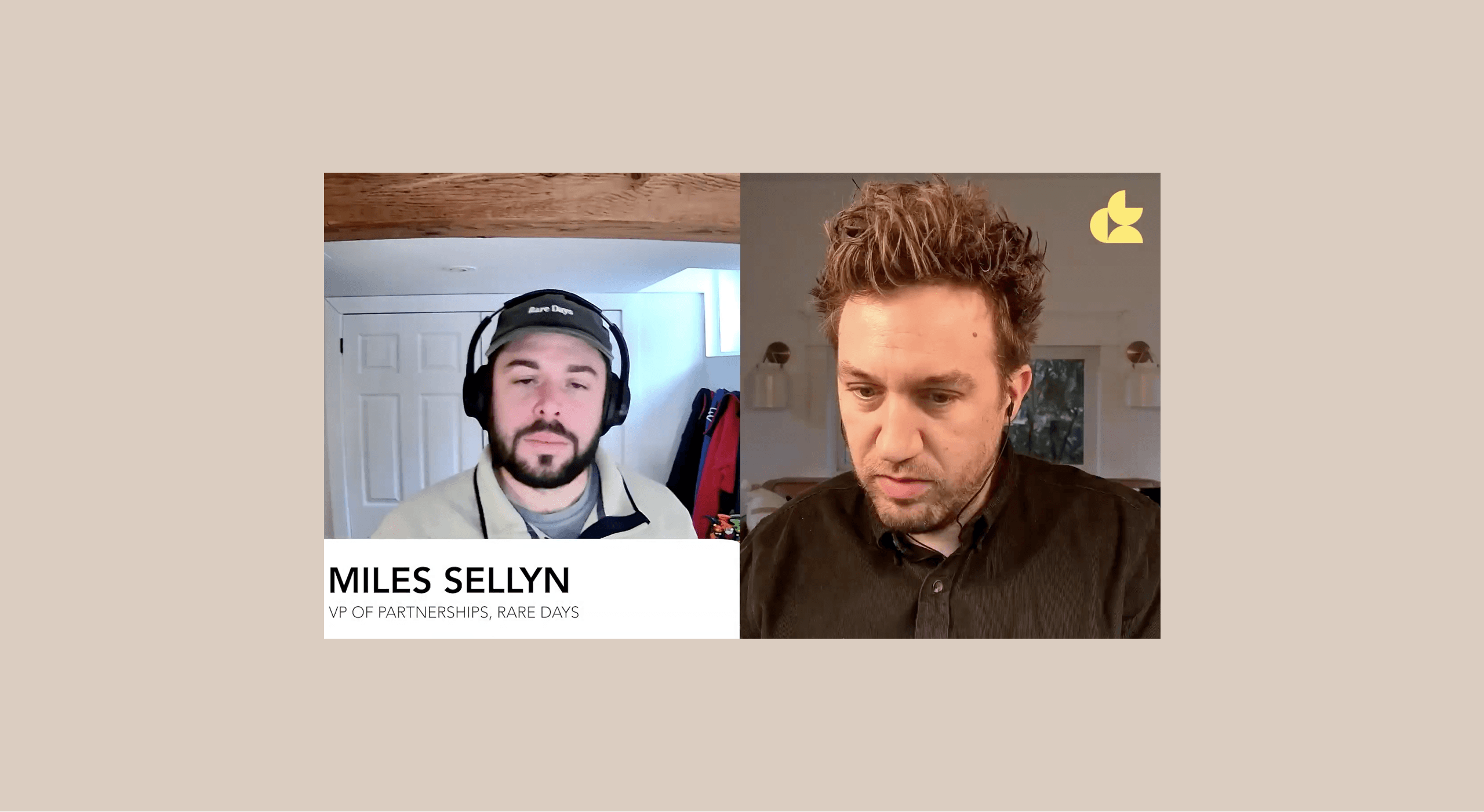
Close Up: Miles Sellyn
CGA Programming Chair Jeff Barrett recently spoke with Miles Sellyn, VP of Partnerships at digital product agency Rare Days, who makes a compelling argument that the future of content creation lies in creator-driven software development. The interview, as well as other CGA content, can be found on the guild's new content channel; watch the clip here.
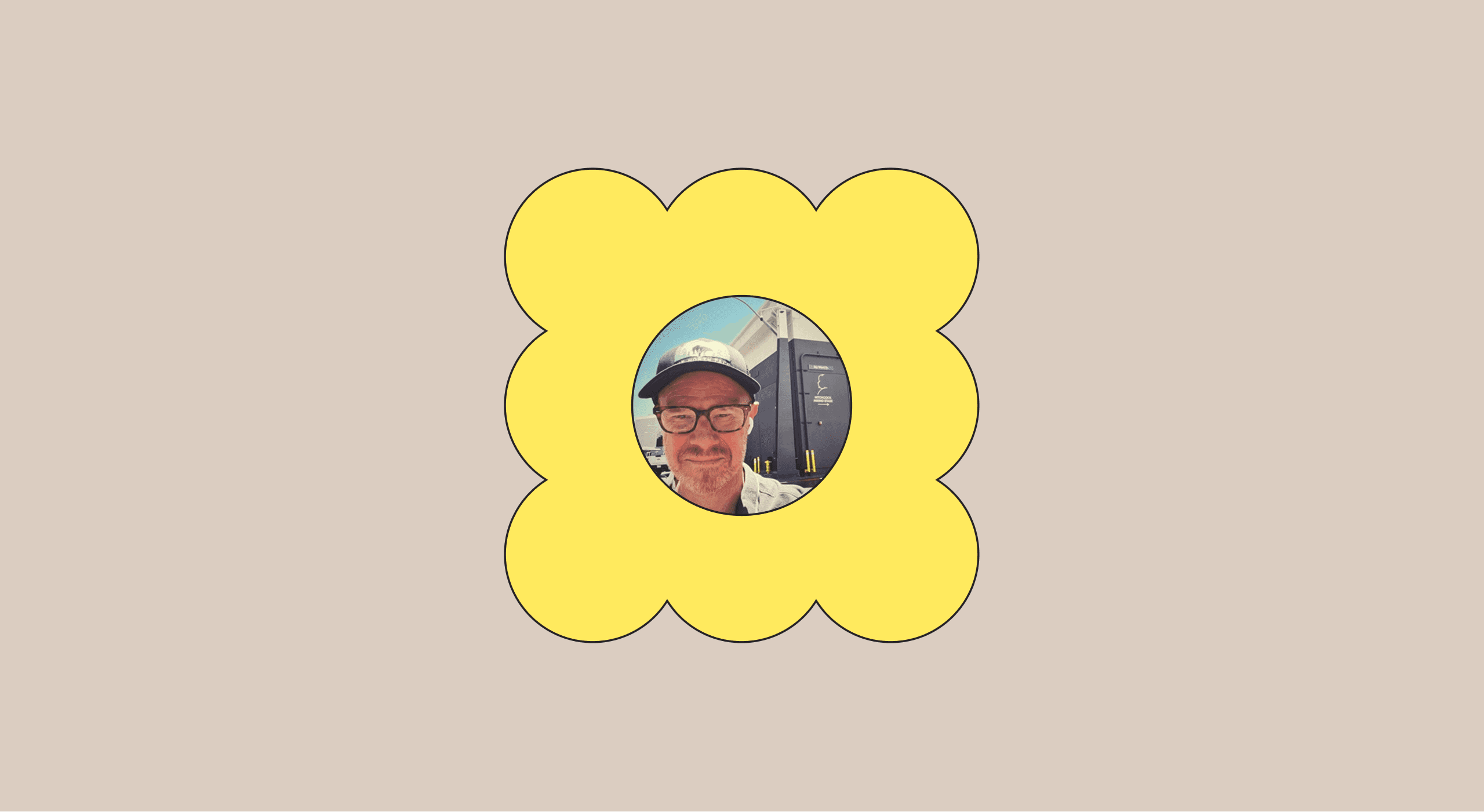
CGA Profile: Board Member, Benjamin Havey
Benjamin Havey has been working at the intersection—if not the collision—technology, storytelling and media for almost three decades. A member of the CGA's Board of Directors since last year (and a trusted adviser in years prior), Ben sat down with CGA Monthly to discuss the future of content, entrepreneurship, and how a one-time would-be hippie poet became an evangelist for digital content creation.
So before you were Benjamin Havey, CGA board member, you were Benjamin Havey... what?
I like the line from Goethe, "At the time, my life seemed like chaos, but as I look back, it's all laid out in chapters." I've been really lucky to work for more than twenty-five years in tech and media. My original plan was actually to be a hippie poet.
Hence the Goethe shout-out.
Exactly. San Francisco State University, I studied English, journalism and film, but then got super interested in semiotics and the language of meaning. And then, my sophomore year, I got recruited by Apple to be a campus evangelist. So I considered: Hippie poet? Cool. Tech job, car, apartment? I think I'll go with that, actually. [laughs] So I got pulled into the tech side of things. I worked for Apple all through school and ended up working for them again in Europe. This was right when kind of Eastern Europe was opening up, and so they wanted someone going into Poland, Czech Republic, Ukraine and other places to set up distribution networks, figure out Polish fonts and all that. It was wild. That led to other jobs in hardcore tech, both at Apple and Netscape, as well as a startup called Mubi TV, which was one of the early mobile streaming companies.
Streaming mobile content from the start! I love to hear it.
Then I spent about ten years focused on startups, advising venture capitalists like Kleiner Perkins or company founders. I even founded a company myself, which had a halfway decent exit. One day I went to lunch with a good friend who was working for the CTO of Disney at the time. He told me: "Look, I know you're gonna go start another company, but, why don't you come in and talk to me and my boss, and maybe help us stimulate some new ideas." Flash forward seven years later, and I'd built up a pretty good-sized innovation program at Disney and launched an early streaming platform called Disney Movies Anywhere, which then evolved into Movies Anywhere, which was a multi-studio consortium, sort of a locker system.
Hey, I remember content lockers.
Yeah, that was us. Then I had this idea around an innovation hub that I called Studio Lab; the name stuck. It was really a resource and hub for all of the production banners at Disney—Lucas, Pixar, the animation studio, live action. And then we brought in tech companies, working with teams from Salesforce, Accenture, and Verizon, to really try to bridge the gap between storytelling and deep tech, which seems to be my happy place.
You give the impression of a happy guy.
I'm glad to hear that, because no matter where I go, I seem to end up at that intersection. And then, as, as things go, we had a regime change at Disney. The Chapek regime was, let's say, challenging. [laughs] So I had an opportunity to segue over to Universal, and for the past couple of years have been working on a variety of innovation projects with them, focused on cloud-native technology and AI, from both a workflow and an automation perspective, as well as gen-AI and localization experiments. So it's been a, a rich and full life, but I think my connection to the creator economy, has been there throughout. We used to call it “community”, then we called it “social”, and now it's the creator economy.
So what did this thing—community/social/creator economy—look like back in the day?
Hmmmm. Okay, here's a little anecdote. So I was in Poland, sitting down with Gazeta Wyborcza, which was Lech Walesa's union newspaper. And the way they got it printed was by going in after hours and using the, the communist regime's printing presses, right? Which was obviously not ideal.
To say the least.
Did they sneak in? I don't know. They didn't tell me, and I was fine with not knowing. But when things opened up and we sat down with the Macintosh, with its Polish fonts, and showed how they could handle all the layout and publishing, their eyes lit up. "Wait, wait, wait... we can just do this right here?" So I've seen first hand the liberating nature of technology, how it's continually allowed more and more people to have a voice, a high-quality voice, one that can reach across national and cultural boundaries. That's been one of the most powerful things for me. As the studio and media landscape continues to change, I'm just thrilled to see all of these new storytellers emerge. I mean, technology has gotten to the point where you basically have a studio in, in your pocket, right? You literally can shoot, edit, and deliver content on your phone anywhere in the world.
As lots of CGA members do.
But of course, with that comes certain complexities. I think one of the missions of the CGA that's so important to me—since I'm a dad and a provider/protector type—is protecting these emerging voices. So the CGA Rider has been amazing. I'm so excited about Mosaic and the opportunity to make the creator economy more of a clean, well-lighted place to work. Because I do worry... They talk about the creator economy paradox, right? On one hand, it's this trillion-dollar opportunity, but the truth is that a majority of creators barely make subsistence wages, are suffering from burnout and don't have healthcare. And that just doesn't seem right. So if we can help level the playing field, that's a mission I can absolutely sink my teeth into.
So in terms of making these solutions happen, is it, is it a question of will on the part of people who hold power and capital to recognize the utility of having a healthy ecosystem? Or is it a matter of the tools not having evolved yet, a development and process issue?
I think it's a combination. Certainly there needs to be a set of rules of engagement around creator economy gigs. I mean, if you're doing a content deal with a well-known brand, you're probably gonna be fine. But further down the food chain, you find all kinds of unethical dealings. So we want to provide that structure, create that expectation. As for the other part, I think the tools are out there. In many ways, I think the CGA can act as a curator. We can channel partnerships with the best providers, we can negotiate discounts. But most importantly, we can provide awareness. I'd love to see something like a “creator store” emerge, where we have, say, half a dozen or more tools and technologies that we have verified as being helpful, but also work with Creator ID, work with our Mosaic system. I imagine this ecosystem of tools. We don't have to build them all. But being that central hub, whether it's a point of discovery for creators and brands or a verification system where we're able to authenticate projects, content, individuals... this is how we play a role.
There's something almost paradoxical about it, insofar as a the guild is the institution where you go to learn your trade. But this trade, content creator, is completely in flux... it feels like it's being re-invented every six months. How do we fulfill that responsibility to train people for a system that's so volatile?
I think about it from a couple different dimensions. Because it is so malleable and we are still in this formative stage, we have an opportunity to influence the outcome, right?
Absolutely.
In the early days of Hollywood, it was a free-for-all. There was all sorts of exploitation, whether it be minors, or day players or even stars... people got locked into contracts to the end of time. I think it was the collective will of the guilds that brought some structure and sanity to it. So I think the fact that it's so dynamic just means that we have to be on our toes. We can't just write the playbook and set it down; it's constantly evolving. So we need to be listening, providing information and strategy about what's happening.
So you've been at the vertex of traditional entertainment and the creator universe, which is something that evolved parallel and for a long time completely unrelated to legacy media. Now that the two are converging—simply because of the size of the online audience—how does legacy media and the creator economy build bridges with each other? How do they live with each other without one cannibalizing the other, in either direction?
I feel like it's the digital marketers who were kind of the first outpost of legacy media to recognize the power of these platforms. They have significant engagement goals, so partnering with creators has been something that's made a lot of sense from a digital marketing perspective. And then, of course, celebrities have built larger and larger followings using those promotional channels. So what started as a promotional platform has become more and more interwoven. I mean, YouTube personalities are getting TV shows, right? Quinta Brunson from Abbott Elementary... she came out of YouTube. She just told her story, and then it got picked up! So I think you're seeing that barrier starting to break down, incrementally. We're seeing deals like Mr. Beast and others negotiating with Netflix to have their own shows. The streamers are starting to step in to secure and curate content.
Which only makes sense. Netflix, after all, isn't really a legacy media company, even though it walks and talks like one.
Right! Gaming is another space that's bridging the gap, with Roblox and other platforms. We're seeing a real blend, which I think is super exciting. But it also underscores the need for advocacy. On a traditional film production, you have protection via IATSE and other orgs, who are in a position to provide a set of rules that keeps everybody in a good place, or at least a fair one.
So what is the most important voice or ally that we as a guild can pursue? Where is the center of power we can get on our side to move the needle for creators?
I think it starts with the creators themselves—placing them at the center, maintaining a creator-centric mindset. And then I think about the technology side, making gen-AI work for creators. One of the things about TikTok that's really cool is how quickly it went from "Oh, I shot a video and uploaded it," to, "Hey, I'm doing jump cuts. Hey, I'm doing titles." The ability to provide those higher-quality production values, the lessons you can learn from your analytics, creating those feedback loops that make for easier distribution... it's taking a lot of the friction out of the process. So that's one leg of the stool. Then there's a level of real-world legal and business knowledge, whether it's how to set up an LLC, how to get insurance and protect. Or, not least, "Here's a contract rider you can put in all your deals that make sure that you're taken care of." And then third, there's thought leadership, providing a forum where, creators can exchange ideas, exchange best practices, and build a community. So yeah—tech, business, community... that stool has got its three legs. Let's stand it up and build something on it.
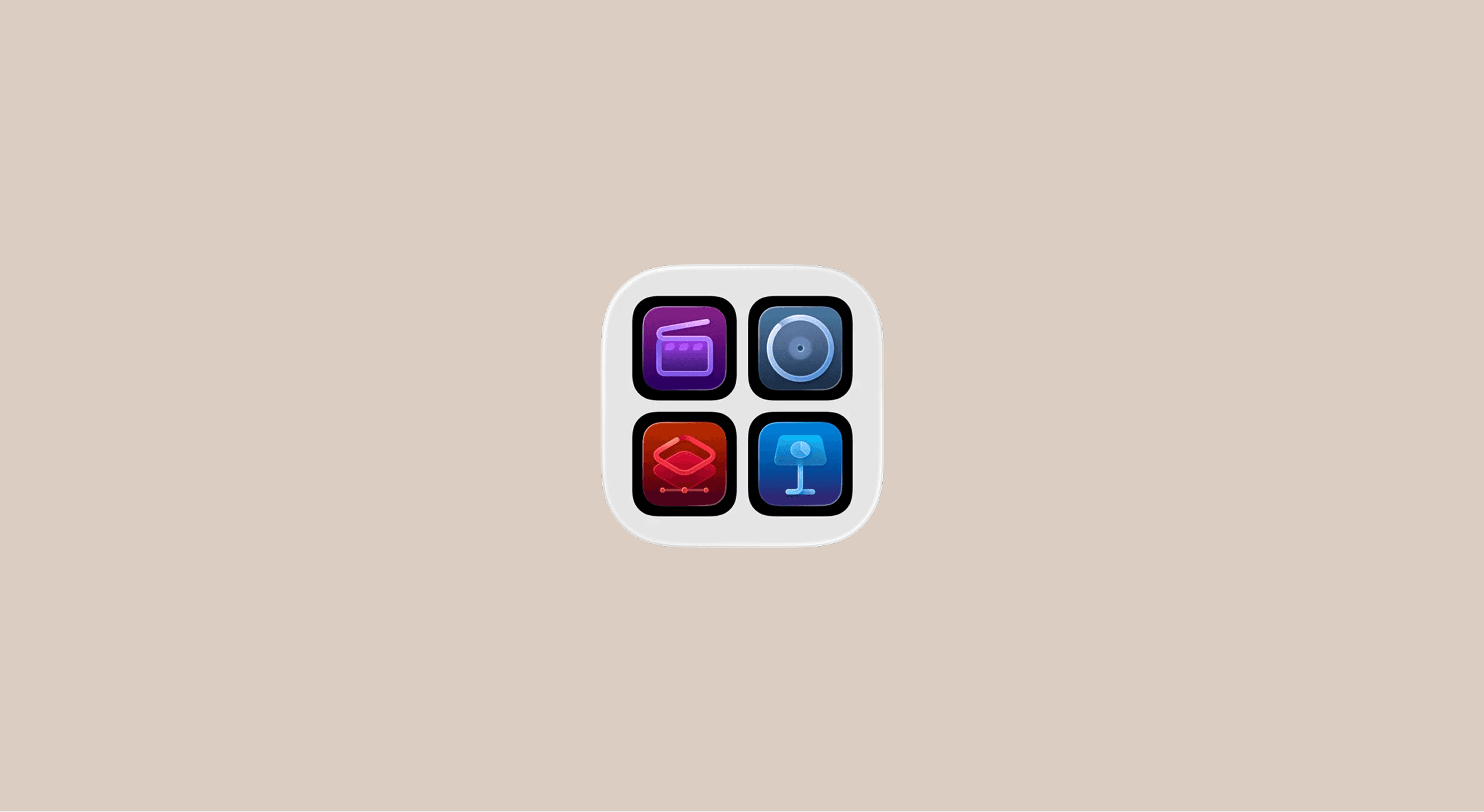
Built for Creators
When Apple makes a move, it means something.
A few weeks ago, Apple made one. They released Apple Creator Studio, a curated suite of tools built specifically for creators: Final Cut Pro, Pixelmator Pro, Logic Pro, Keynote, Pages, and Numbers, bundled together and priced with students and educators in mind. This is not a product launch in a vacuum. This is one of the most valuable companies in the world looking at the creator economy and deciding it is worth designing for.
We are not here to review the product. The more important signal is what the product represents. When Apple assembles a suite around the creative workflow, it is not following a trend. It is confirming one. Creators are no longer a niche the industry tolerates. They are an audience the industry courts, and increasingly, builds for.
CGA has been operating on that conviction since day one. What we are building now is the infrastructure that makes that conviction permanent. Another piece of the puzzle dropped in December, but with the Oscars happening imminently, we were freshly reminded of it: the Oscars moving to YouTube. It's not happening this year, or next, or even the one after that, but come 2029, Oscar night will leave the broadcast airwaves for the digital multiverse.
The Motion Picture Academy is surely eyeing the global reach of YouTube and the synergies it would allow for the broader constellation of Academy programming, like the Student Oscars, the Science and Technical Awards, and the Governors Awards. But let's be honest: this move is happening because of creators, or at least because of the platform that creators built. For thousands of movie-themed content creators, this shift is like having the Oscars move from a distant palace up on the hill into the neighborhood where you and your friends live. And you can bet that the Academy has made the call that those thousands of creators will sell the show better and wider than a Disney-owned television network.
The folks hard at work building the creator economy may not realize it, but ask any of their legacy media-based forebears and they will tell you that the Oscars splitting from ABC was one of those never-gonna-happen events. While other major TV events jumped from network to network, the Oscars stayed right where they were for the last 50 years, a testament to the tradition-bound Motion Picture Academy's resistance to change. But when an institution as careful and circumspect as the Academy doesn't just leave its historic network home but leaves the medium of commercial television altogether, it's a sign that the balance of power has shifted to creators and the audiences they command.
Now all creators have to do is wake up to how powerful they've become. We're working on it. Explore Apple Creator Studio and see what they built for you.
CGA & SXSW
Several members of the CGA team are on the ground in Austin this week, and if you've been watching the SXSW programming from a distance, the FOMO is justified. SXSW has always been a bellwether. What shows up there tends to show up everywhere else six months later. And this year, the throughline across film, music, technology, and interactive is impossible to ignore: the creator economy is no longer a side conversation. It is the main stage. The convergence of entertainment, technology, and independent creative voices that has been building for years is filling the rooms in Austin right now, and the people in those rooms are shaping what comes next.
Creators Guild of America © 2024