
February 2026
CGA Monthly
The Road Ahead
Looking back at where the Creators Guild of America was a year ago, and then where it is today, it's like watching movies go from black & white to color, or audio go from analog to digital. This time last year, there was no standard contract language that content creators could use to protect themselves from unfair or predatory deals.
Today, the CGA Rider has been downloaded thousands of times, and its use guarantees creators fair windows for payment, ownership of their content, protection for their name, image and likeness, and the authority to determine how or if their content is used to train AIs. A year ago, if a brand or platform was late with payment, creators had no recourse except to ask nicely (and then ask nicely again, and again...).
With the CGA's introduction of its Compliance service this fall, creators now have an organization that will go to bat for them, advancing and escalating the request and getting them the compensation they're owed. We've hit some big milestones (over 10,000 members and associates now in our system), taken dozens of our members to Snap School, joined the industry-wide C2PA alliance for content standards, and welcomed the brilliant ex-Disney/Universal exec Benjamin Havey to our Board of Directors. Even we're amazed had how far we've come.
That momentum is set to carry into 2026, when we'll be providing our members with their unique Creator ID codes, ensuring the authentication of their work as human-created within the growing morass of AI-generated content. We'll be unveiling our proprietary Mosaic technology, laying the groundwork for a standing independent database to track and verify our members' work. Our Created By pilot program will debut at conferences and festivals around the nation, and we'll step up our public advocacy campaigns to make sure their priorities are recognized by lawmakers and digital policy leaders. And that's just the stuff we've planned for; if 2025 is any guide, we'll formulate and execute new initiatives as the year requires.
Thanks for being a part of this journey. From all of us at the CGA, welcome to the next stage.
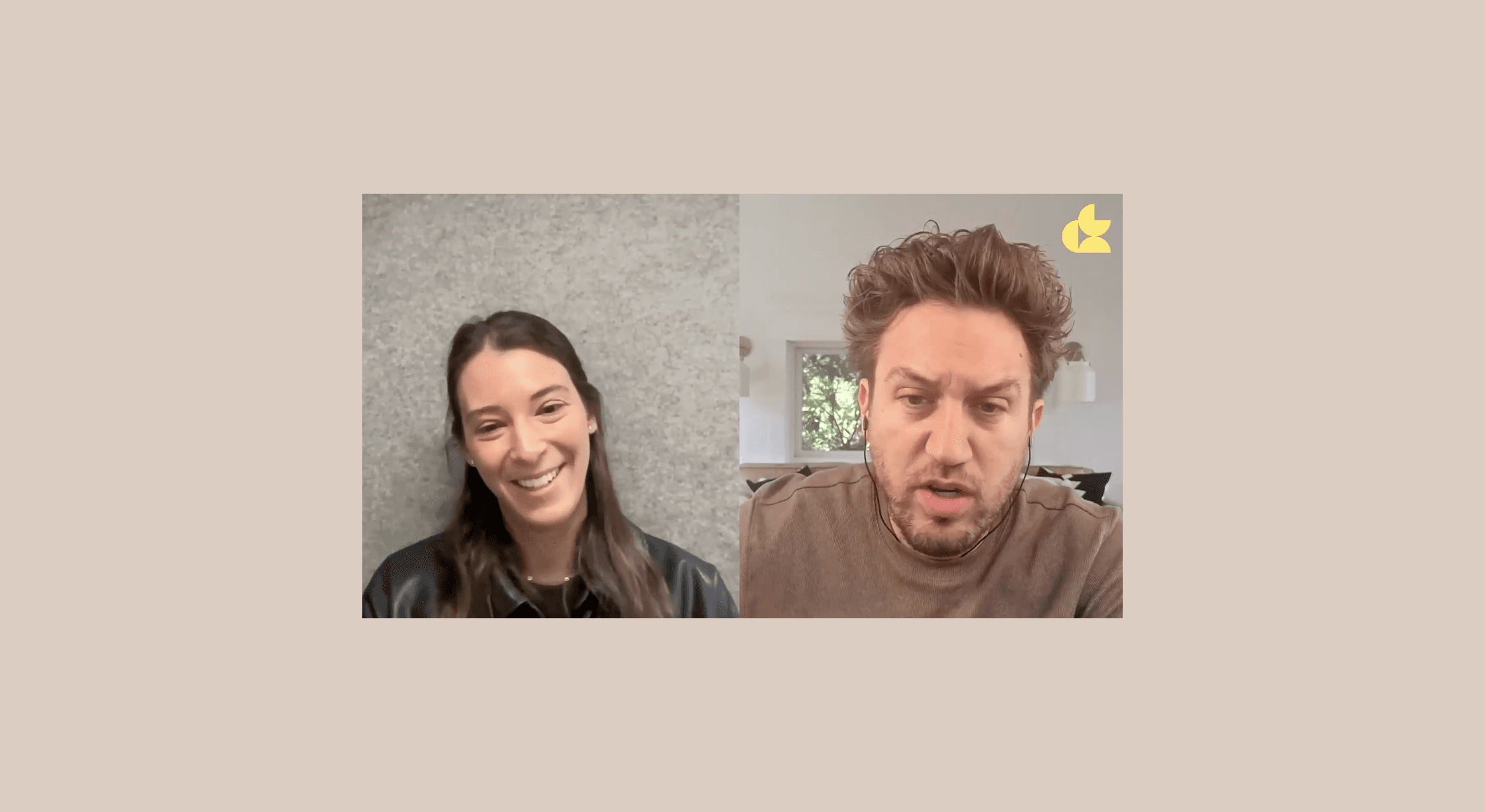
Megan Lightcap
CGA Programming Chair Jeff Barrett recently spoke with Megan Lightcap, a partner at the Slow Ventures Creator Fund, discussing (among other things) the affinities between creators and startups and what creators stand to learn from each other. The interview, as well as other CGA content, can be found on the guild's new content channel.
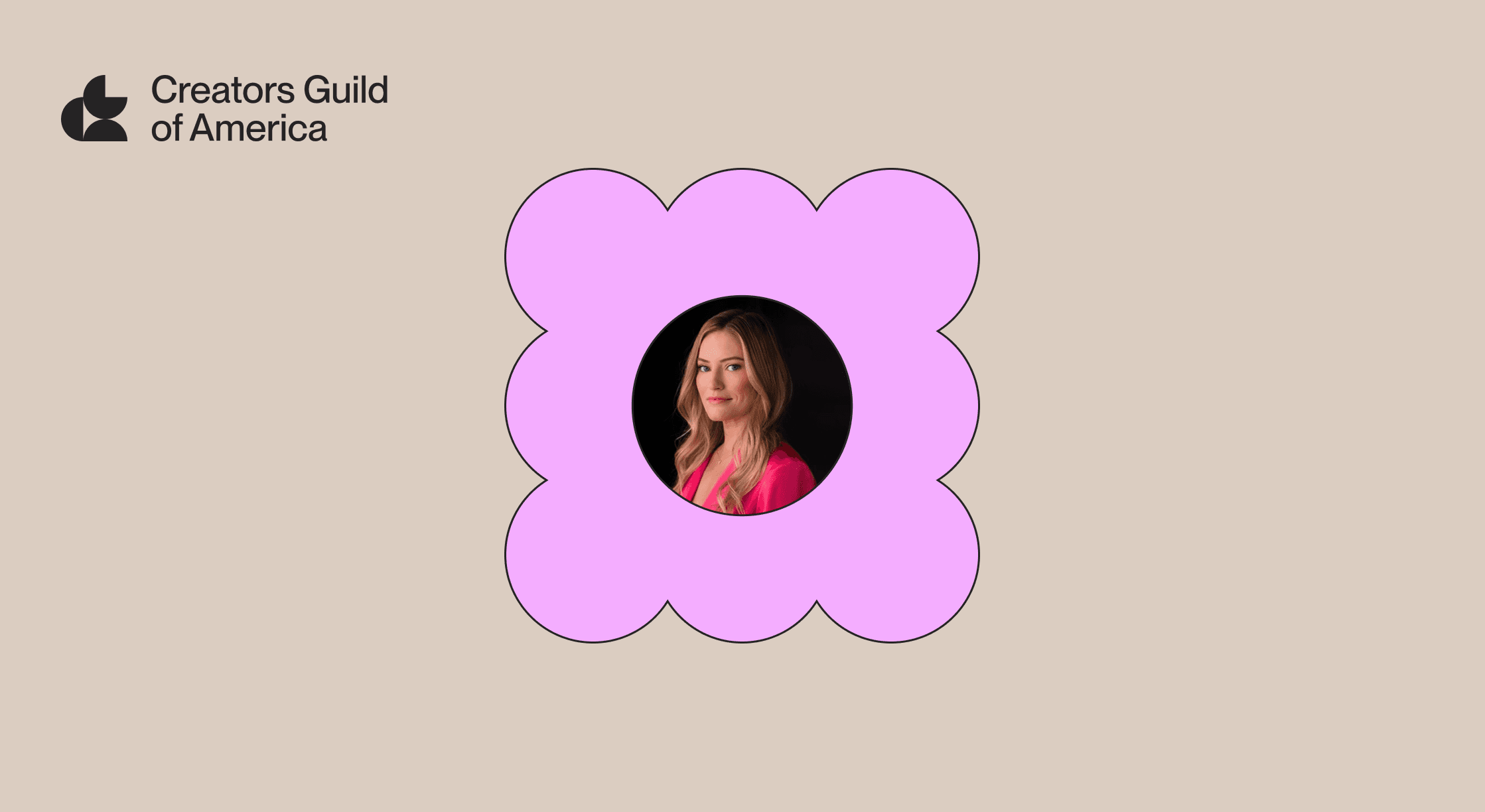
CGA Profile: Board Member, Justine Ezarik
There are tens of millions of creators working today, but once upon a time, if you can believe it, there were only a few hundred people doing this, and one of them was Justine Ezarik. Creating content under the handle iJustine, Ezarik has built a reputation as one of the most trusted—even beloved—creators working the technology beat. She has a particular affinity for Apple products, a connection that began in 2007 with a seminal clip in which she reviewed her 300-page iPhone bill. Justine has proudly served on the Board of Directors of the CGA since 2023, after we assured her we would never send her 300 pages of anything.
So your career has this sort of origin point with the 300-page iPhone bill, which was one of the first clips that ever went viral. Obviously, it's a different world today and online video is a different thing than it was in 2007, but what was it about that clip that connected with people at that moment?
Well, it was timely. This was Apple's first version of the iPhone; it was something that people were waiting for, and the clip had that “perfect storm” quality. I had sent thousands and thousands of text messages because of Twitter; Twitter used to be all text message-based. So it was thousands and thousands of text messages, each one itemized in this bill—which came to my house in a box. [laughs] Part of what made it work was the irony of this digital device that wound up requiring Apple to send me a ream of paper in a cardboard box. I think I put some tagline that was like, "Save a tree" or "Use e-billing," something like that. [laughs]
Obviously that clip had that authentic feel, which is still the key quality that audiences respond to in a piece of content. And authenticity necessitates a degree of honesty. Is it tricky to maintain that kind of authenticity when you're in the kind of relationship with a brand that you have with Apple? I guess the question is, how do you get to the point of Apple trusting you, even if they know that you're going to speak your mind and say things that they might not like?
Yeah, I think it's interesting, especially because Apple is one of the brands that like I've never actually officially worked with.
Really? I admit, I made an assumption that—
No! It's okay. I mean, I know everyone thinks they pay me, but that's the one brand that has never paid me. [laughs]
Wow. Today I Learned...
I think they treat a lot of the creators sort of like traditional like journalists or media. They will give us review units, and it is a trust thing, especially if they are giving you products early. You can't talk about it. You can't like take them outside. No one can see it... It's kind of a terrifying thing. But like you said, brands want that authentic voice. They get it. The brands I've worked with have told me, "Do you know what? I trust you. I know your audience is gonna trust what you say." Which allows for a back and forth where you sometimes have to speak your mind to the brands and say, "Look, this is not gonna work. I'm going to get made fun of. You're going to get made fun of. This isn't a win-win." So I think it's a matter of trying to find brands that you authentically would like, because that makes it so much easier. [laughs]
So once you had this break and went viral, how did you work to like sustain that energy and that audience, not only to keep it but to and grow it?
I think it's partly accepting that not every video's going to go viral. I mean, I guess you can strive for that, but it's an exhausting mentality, and you're gonna burn out. I know that there are videos I've made that are better than others. There's some that I'm making for myself, and then there's some that I'm making for the brand. A lot of times, brand videos can get kind of “pushed down” in the algorithm. So a lot of brands partner with creators, and then have to re-target the video to who they want to see it, outside of your own audience.
Back in the 2000s, you guys were effectively making up the language of internet digital content as you went along. In those days when you were kind of figuring out what this animal was, who were the people online that influenced you, that made you think, "Oh, that's a cool way to do it.”
It was so early. There wasn't any sort of playbook. But early on, there was a creator, Brookers... I mean, my content wasn't necessarily like hers, but it was always so inspiring to see another woman just being silly and goofy and having fun and being herself, so I always admired her for that. And then there was Rhett and Link, who I found very early on, a duo. I had started making videos with a friend of mine, so I related a lot to their content. They were super funny. Also Philip DeFranco. They're still at the top. It's so cool to see those guys still killing it.
Yeah, that's got to be gratifying. So, thought experiment: If you were starting out as a youngish creator today but, y'know, magically had the wisdom of yourself right now, what would be your priorities? What would you be trying to do to, to break into or to get ahead as a content creator?
I think it's just trying to be consistent. I mean, it sounds obvious but one of the reasons that I'm still around is, like, I haven't quit. People ask, "How have you done this for so long?" I'm like, "Well, I just haven't stopped." [laughs] There have obviously been ups and downs. I've taken so many breaks, but I never talk about taking a break. I just create a little bit of thought content and post it while I'm off doing whatever else it is that I'm doing. So it's kind of like I'm just always there. I'm always around. I don't make it a big deal, like, "Oh, I need a break! I quit!" (laughs) Which all content creators do so many times.
It's almost its own meme at this point.
Yeah. I mean, it could be good because then it sets up the expectation like, "Oh, this is so exciting. I can't wait until they come back." But I've never done that. I think that's just the nature of how I've been creating. Really, I think it's just being consistent. Find something that you really love because, you know, if you're following trends and start making these specific type of videos, then people are gonna know you for just that thing. And then you're stuck when you realize, "I actually don't like this at all." Finding something you truly love and being consistent is so important.
You've been a Board member of the CGA basically since its inception. What do creators stand to gain by coming together as a profession? Why be a part of it?
If there had been something like this when I was first starting out, it would have been amazing. The guidance and the knowledge from people in the industry is just unmatched. Even just having the CGA Rider, some basic contract language to be able to help and protect you... I mean, in those early days, I was like, "I don't know what any of this means." And I was so grateful to have friends who had lawyer friends that were willing to read my documents and and help me out in those days. Because I would've had no idea and I probably would've signed my life away. It's just so important to protect yourself. Through the CGA, you have people that you can lean on and other experts in the field. This is a legitimate business at this point. There are people who have been doing it for a long time and they can help guide you.
Yeah, it's incredibly valuable. I have one more question, nice and open-ended... What about AI? Nobody, nobody really knows what's going to happen, but what do you think of these tools and how are they changing how you approach your work?
You know, I think AI is a love/hate. It seems like there's no one in between. I hate to admit it, but I do love AI. I love it in all of the aspects of it helping me do my job and allowing me to be more effective. I know there are the concerns with people using my likeness, and I think that that's going to be the thing that's hardest to navigate. We don't want to be replaced by AI.
Right.
But how do we use AI to make our jobs easier? AI can help me generate a clip that I otherwise would have spent all day going out and filming, and instead I can have my computer create it for me and integrate it into something that I'm already doing. I'm excited about the future of it, right? I think we do need the regulations, and so I support people being speculative about it and voicing their concerns, but I've always been someone who has been, y' know, at the forefront of trying out things, live-streaming my life forever. [laughs] I even opened up my Cameo on Sora, so anybody can make a video with me and my likeness, which is kind of crazy. But it's been a fun experiment and I love experiments like that.
Okay, real last question, what's the craziest Sora video of you that somebody has used your likeness for?
Oh my gosh... Honestly, there's, there's so many and I've probably made them. [laughs]. I mean, there's like hundreds, thousands. I honestly can't think of just one, they're all so wild. But any time you make a video with my Cameo on Sora, I have it so that there's a pig in it.
Really?
Yeah! So every single video has this added level of comedic value because no matter what you find in the video, there's always a pig in it.
Okay, that's awesome. Oink, oink.

What It's Going To Take To Make A "Creator" A Creator
Creative careers have never been easy to come by. Not just because creativity is an uncommon trait, but because the skill set that enables visionary creativity doesn't always overlap with the skill set that operates effectively in the marketplace. Creative voices need help to reach their desired audience(s), be it the popular masses or an essential circle of patrons who can fund the ongoing work.
Legacy media has had decades to create institutions and tools to provide the infrastructure necessary for creative careers to thrive. Labor unions, rights-management companies, agencies and distribution networks are only some of the entities that came into being to ensure that creative work could find its way into the marketplace and (just as important) that the creators were compensated fairly for the success of that work.
Digital content creators currently have none of that infrastructure. They're starting from scratch—ironic enough, given that in the past ten years, the number of creators has grown to dwarf the number of writers, musicians and actors combined. But this spring, the CGA is laying the foundation for the professionalization of content creation, launching a system that will allow creators to catalog and track their work across platforms, creating an independently verified record that's accessible, shareable and comprehensive.
The system is called Mosaic, and it's being built from the ground up with creators at the center. When it's completed, it'll function as something like a cross between IMDb and LinkedIn, but with, respectively, the verification and granularity that those platforms lack. As a creator, your page in Mosaic will track all of the work you've done, whether for brand deals, personal channels, or as a full-time employee or staffer. It'll allow you to link that work to collaborators and employers and utilize those contacts to verify your claims as a creator. It'll provide the breadth of your career at a glance and evidence of your professional qualifications to potential employers, government auditors and anyone who asks you “so, what exactly do you do?” And its use will be free of charge to all creators.
Once it's launched, we'll be working to integrate its data with other markers like the Creator ID issued by the CGA (proving you're a human being and not AI) and the Content Credentials provided by C2PA (establishing provenance of and tracking editorial changes to content). Slowly but surely, the CGA along with its allied organizations is building the tools that will let you dictate the arc of your career, and open up opportunities to take your content to new audiences, new collaborators, and new revenue streams.

All Aboard For Mosaic Alpha
If the above item got you interested or excited, you can get a sneak peek at the Mosaic functionality by becoming one of the system's alpha users. We're putting the system through its paces as we speak, and we can use another set of eyes (and content) to make sure the system is equipped to meet your professional needs. Click the button below to reach out and sign up.
Creators Guild of America © 2024