
December 2025
CGA Monthly

Here's To Your Health
We've seen the same news story on outlet after outlet: Health insurance customer opens email announcing new premium rates for 2026, discovers that monthly payment will be going up 50%, 100%, 250% or more, subsequently freaks out. Maybe you're one of those freak-out individuals. Even if you're not, we bet you know at least a few of them.
This panic has been occasioned by congress' decision (specifically, that of its Republican majority) to allow the federal subsidies for ACA marketplace plans expire. That being said, the issue is still in play. While the Democratic caucus' federal shutdown failed to secure the extension of the subsidies, Congress is scheduled to vote on the extension early next year. Furthermore, President Trump recently floated, and then withdrew, a proposal to extend the subsidies. Even if the subsidies are ultimately restored, this kind of volatility and uncertainty isn't helpful for anyone's peace of mind or bottom line.
Now more than ever, creators need guidance to figure out the health care options that work best for themselves and their families. Navigating the marketplace was no easy task even before the subsidy squabble flared up. Today, any creator could be forgiven for saying “screw this” and just hoping they don't get sick in '26.
The first is Stride, the CGA's primary health care partner. As we announced earlier this year, we partnered with Stride to allow our members to take advantage of its experience and expertise in helping individuals find health plans that work best for their particular circumstances. The folks at Stride understand creators' unique professional challenges, the way their revenue is often dependent on a shifting set of brand deals and the unpredictability of fluctuating audience and viewer metrics. While they're not an insurance company per se, they're a valuable—maybe even essential—ally in making sure you maintain your coverage at a cost you can afford.
The Stride/CGA health care portal can be found here. On that page, you can plug in a handful of inputs such as ZIP code, family size and health needs, and receive links to a selection of plans on the national healthcare marketplace, based on your health care needs and budget level. Once you select a plan, Stride's platform expedites the application and purchase process, turning an otherwise grueling effort into a brisk and frictionless operation, closer to taking an online survey than purchasing health insurance. Stride, like everyone else, is currently working in a post-ACA subsidy marketplace, but within those limitations, you can count on them to help you maximize your health care dollars.
The good news is that creators are a big enough (and, significantly, young/healthy enough) segment of the healthcare marketplace that companies have started to take notice and address their needs. Organizations like essentL Creator offer not only health insurance options, but a suite of business service tools optimized for our profession. While the CGA is not a partner with essentL they offer CGA members a discount, and we're encouraged to see such companies active in this space and attempting to meet the challenge of providing creators with the kind of guidance that other professions take for granted.
Times are tough. Times are weird. There's no getting around it. But there is getting through it, and the way we get through it is together. We'll be here in '26, and so will you. Despite all the tough and the weird, you have our sincerest wishes for a warm and generous holiday season.
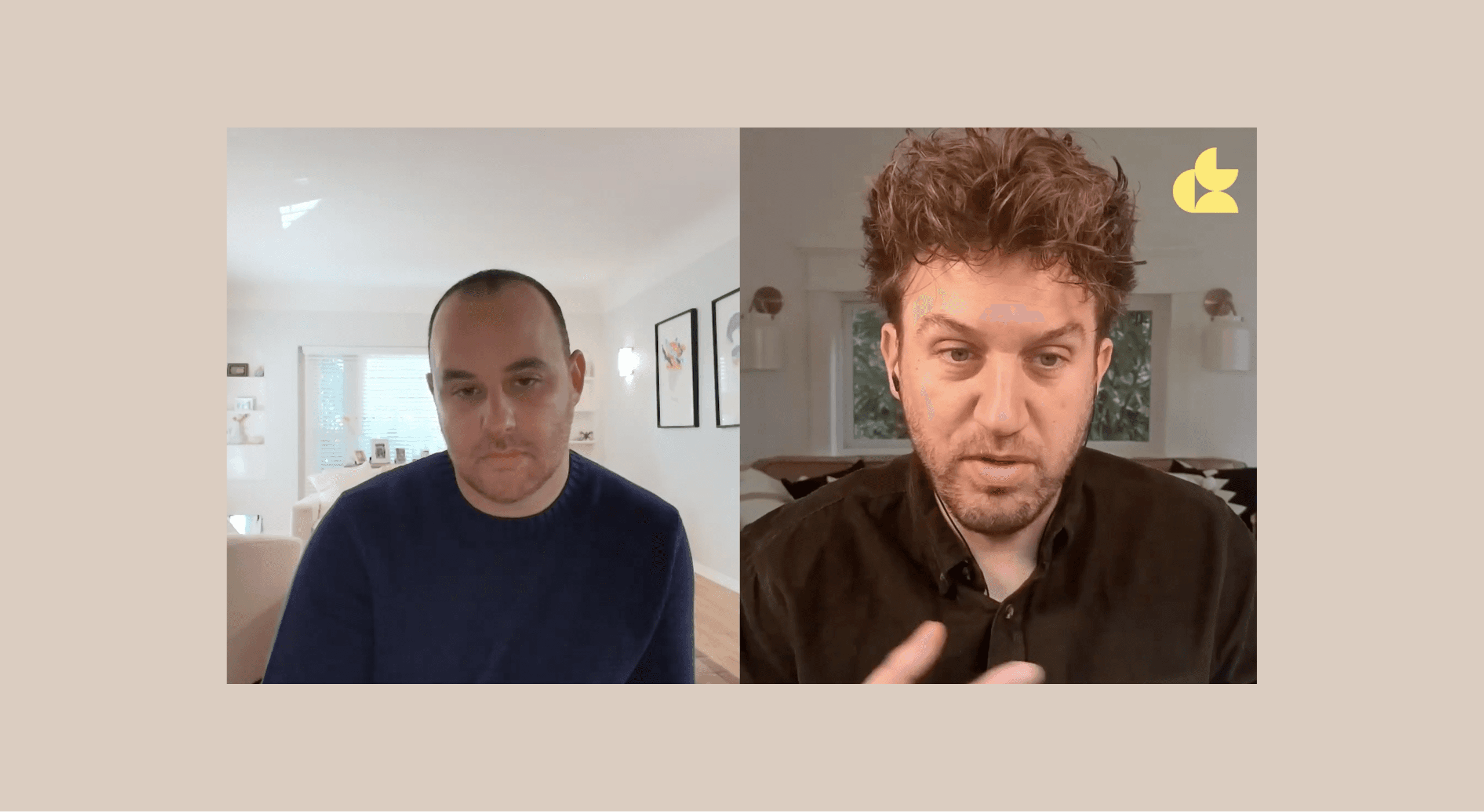
David Neyman
CGA Programming Chair Jeff Barrett recently spoke with Logitech's Head of Talent & Content Partnerships, David Neyman, discussing (among other things) the nature of the creator-brand partnership and what conditions are necessary for making those partnerships productive in the long term. The interview, as well as other CGA content, can be found on the guild's new content channel.
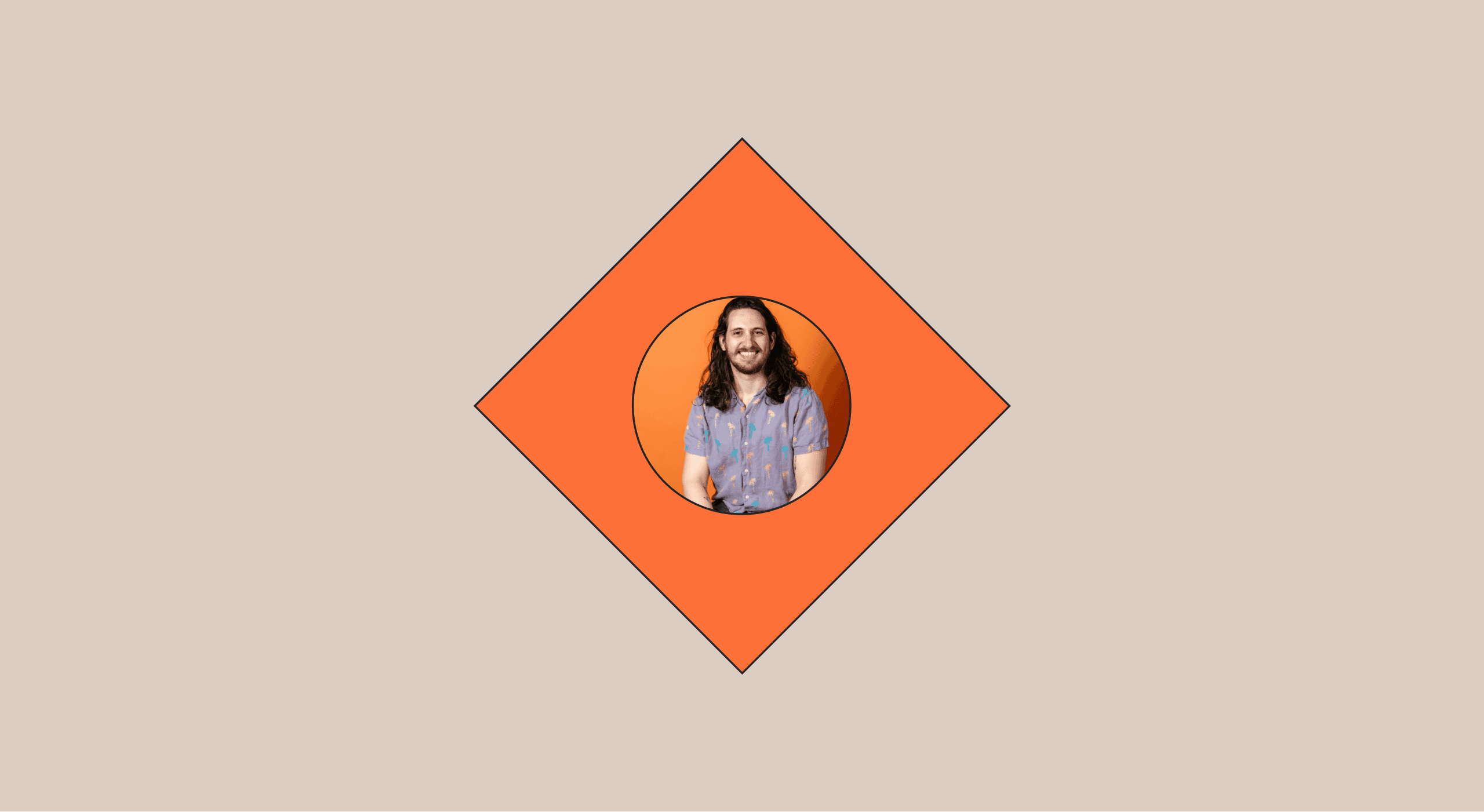
CGA Profile: Sidney Raskind
Sidney Raskind (aka Sidney Raz) has been a creator since 2020, whose content focusing on life hacks and domestic tricks and shortcuts have won him over 7 million followers across a variety of platforms. His first book based on his content, Life Hacks, Tips and Tricks: And More Things I Didn’t Know Until I Was In My 30s was published last year by Linden Tree Books. Sidney is a charter member of the CGA's Creator Council.
Before you were Sidney Raz, content creator, who were you? What were you looking to do?
If I'm being totally honest, I never had anything else I wanted to do. Right out of high school, 2007, I started making videos. Smosh was getting big. Hank and John [Green] started maybe a year or so after that. I just knew that I wanted to do this. And it didn't work for about 15 years. [laughs] I worked at Fine Bros; that was, like, my trade school. I was a social media manager, and the content traffic coordinator, doing all the scheduling and publishing. I saw TikTok coming into the zeitgeist in 2019, and I was like, "I know how to do this.” I had seen all these people succeed just by uploading and figuring it out later, so I thought I'd do the same, and TikTok gave me all of the things I needed to do it. And then, um... “luckily”, we were all locked inside for a year-plus.
I remember that year.
Right? So that gave me a lot of time to keep the cadence going. By maybe March or April 2021, it finally hit. I found a format that worked, and I just kept going. I knew that that was the only way that I would catch this lightning in a bottle.
How did you find that voice, the format that finally clicked for you?
Part of the story was doing sketch comedy. After about two years in living in LA I started taking comedy classes, and then I joined a sketch comedy group about a year or so later. I was performing live, weekly or monthly, writing all the time. But all of that was just so I could be a better YouTuber. I knew that there was something I was missing in terms of my comedic timing or in my presentation to the audience. So that mixed with my “trade school” sort of met at the point where TikTok gave me all of the technology I needed right there in my phone. It sort of felt like, this is what I've been waiting for. But the biggest key, I think, was understanding how I was being perceived by the camera.
How do you mean?
Just understanding that I was a 30-something newlywed, locked in my home. As a 30-something guy, you often are perceived as a sort of know-it-all. And it can be kind of annoying to listen the lectures from these people, like, "Why are you telling me how to change a tire?” I felt like I was being talked down to. So when I started admitting that I didn't know *anything*, and made that the jumping-off point, people latched onto that. I think that they enjoyed seeing that, even if it ran the risk of coming off a little cringey. But I knew that format was easily repeatable, I knew that it was easy for brand integration. I think I'm still finding my voice in a lot of ways, but now the challenge is: Okay, you've got the following... now keep it. Hone it. Understand it. Keep that cadence up and figure the rest out later. And that's what I'm doing now.
In terms of brand integration, how did that work for you? What was that process like? Did you get approached? Did you approach?
So I put my email in my bio. Which I don't recommend. I actually recommend buying a website, setting up an email server and doing it that way. But at the time, again, I didn't have any money, and I didn't have a manager. But I started to get approached and I was like, "Oh hell yeah, here we go." I started submitting scripts, started basically plugging the brand into my regular format, and it worked. When it came time to do the deal, I threw out a number. And then another brand reached out, and I threw out a number that was double the first number. I kept doing that until a brand said no, and I said, "Okay, there's my ceiling." But for the most part, it was truly as simple as: upload, get an email, reply to the email cordially and professionally, do the brand deal, wait for the next one.
It's easy if you know how!
[laughs] Right. I mean, obviously we all like to work with blue chip brands, but there's a lot of other brands out there that are just hoping influencers say yes. I think I say yes to more brand deals than a lot of other people do. Even if they're not high-paying, I'm still building that trust with brands, which will hopefully get me bigger brand deals down the line, right? But I'm not too picky about it. If there's a check involved, I'm usually like, "Yeah, I'll do your phone recording thing.” Or your vacuum cleaner. Or your new AI coupon tool. I don't say no often.
Right. [laughs] So as part of this feature, we want to give advice to young and emerging creators looking to raise their game. If there's a creator whose goal it is to be working at your level in the next 5-10 years, or even someone who's simply trying to find their voice, what would you say to them?
So I would say that people who are already in the CGA have an opportunity to get guidance more regularly than I had back then. Whether its the CGA Rider or having someone from the guild follow up with brands if they're not paying on time—which is something I had to deal with recently. Those are admin things that can get frustrating, but you just have to learn how to deal with it and stay in the game. For myself, I love being cordial and professional in email. That's an important skill that I think influencers should cultivate, because I've heard from brands that that carries some weight. And they should be taking advantage of cheap options for higher production quality. You can find decent sound reduction equipment for, like, $20. Or microphones that plug into your phone that, again, enhance audio quality so much more than I could do, back in the day. I always thought I was behind because I didn't have the newest phone, but that isn't the case anymore. You can get a refurbished iPhone 16 or 15 for pretty cheap and you'll be ahead of me, because I have an iPhone 14. But Premiere is on our phones now. CapCut is on phones. There are so many different tools, all encapsulated in your phone. It gives you so much more capability than I had in 2007. Which is funny because this is probably the way people talked about the iMac when that came out, right?
“You don't need an AVID system to edit anymore!”
Yeah, exactly. I also think that asking for more money is a big one. Understanding that if they're already paying you and there isn't a view guarantee, that's okay. If the post goes live, they owe you money. People sometimes are scared of the brand being mad at them. What can I say, but, don't worry about that! [laughs] They're generally worried about other things, bigger fish to fry. If they say, "Oh, the views were kinda low," well, great. Just keep making your content. There's another brand around the corner. [laughs] It's great to be a part of this community and learn the trade. But just keep your head down, keep making content. Just keep going.
Whether A.I. is good or will end us all
A person could go a little nuts trying to follow the public discourse on AI. A quick perusal of the news will tell you, among other things:
When AI capabilities surpass the human intellect, our fate as a species will be sealed.
The current investment in AI is untethered from reality, and when the bubble pops, it will crash the economy.
Audiences are growing to hate AI and its attendant slop, and are rejecting it en masse.
At the same time:
Corporate reliance on AI continues at a breakneck pace, with the workforce layoffs to prove it.
AI-generated content continues to attract billions of views on social media.
Entertainment companies are signing development deals with AI-based artists and engineers.
So you can be forgiven if you're having mixed feelings about AI, or if your unmixed feelings are comprised of equal parts confusion and exhaustion. If we get asked if the Creators Guild of America is pro- or anti-AI, our answer runs something like:
Of course we're pro-AI, at least to a point. The story of content creation as a profession is the story of individuals or small groups of collaborators trying to create media that competes for attention with legacy media like movies, TV and video games. The creative and entrepreneurial possibilities that AI creates are simply too big to dismiss. Finding innovative ways to adopt new tools and formats has always been creators' secret weapon. The work that creators put out has always been DIY. But now we have a tool that allows Y to DI on a scale never before imagined. To reject AI, the tool that, more than any other, finally lets individuals compete with billion-dollar media companies, would be to reject the spirit of content creation itself.
The trouble is, creators aren't just using AI. Increasingly, they're competing against it. Whether it's low-grade social media bots flooding the content zone or sophisticated deepfakes designed with deceptive intent, AI is too often the noise distorting the signal of original content. Deepfakes in particular undermine the system from multiple vectors. Not only does deceptive content pull attention (and algorithmic weight) from authentic content, it's easy for creators themselves to become the victims of deepfakes—the short-form nature of much content, coupled with many creators' recognizable and persistent on-screen environments, makes it easier to mimic via AI replication. Rather than stealing audience by creating more sensational content, many bad actors find it easier to steal audience by representing themselves as an already trusted voice in the content space. For creators as much as for actors and celebrities, their future is tied to the integrity of their name, image and likeness, and the degradation of personal N/I/L can be career-threatening, especially when the victim is known primarily through their online identity. It's hard enough to compete with every other content creator out there, but competing with an AI version of yourself is a special kind of nightmare.
The anything-goes quality of the creator economy has frequently been likened to the wild, wild west, and that was true even before AI showed up in force this year. The historical wild west wasn't civilized in a year, or ten years, or 25 years; unfortunately, the job of bringing order to this particular chaos has just gotten both more difficult and more pressing. But there's too much at stake not to hammer out a system that works. The major tech and media companies have enough at stake in the integrity of their IP that some kind of regulations will get put in place—and those regulations will extend to independent creators as well. Platforms like YouTube, Instagram and TikTok know that their vitality is ultimately tied to the well-being of the billions of creators whose churning daily mass of content populates their channels. But viewers should have a means of discovering immediately and obviously whether a piece of content is the product of AI or human creativity; the Creators Guild of America is working towards a standard—called Creator ID—that would allow consumers to make that distinction.
But the biggest challenge will be for corporate rivals to collaborate to create a system that protects their interests and safeguards their brand equity. To facilitate that, the conversation is going to need independent voices recognized as honest brokers on behalf of not a corporate bottom line, but the health of the ecosystem itself. We're proud that the CGA has evolved to help fill that role, and we're ready for the work ahead.
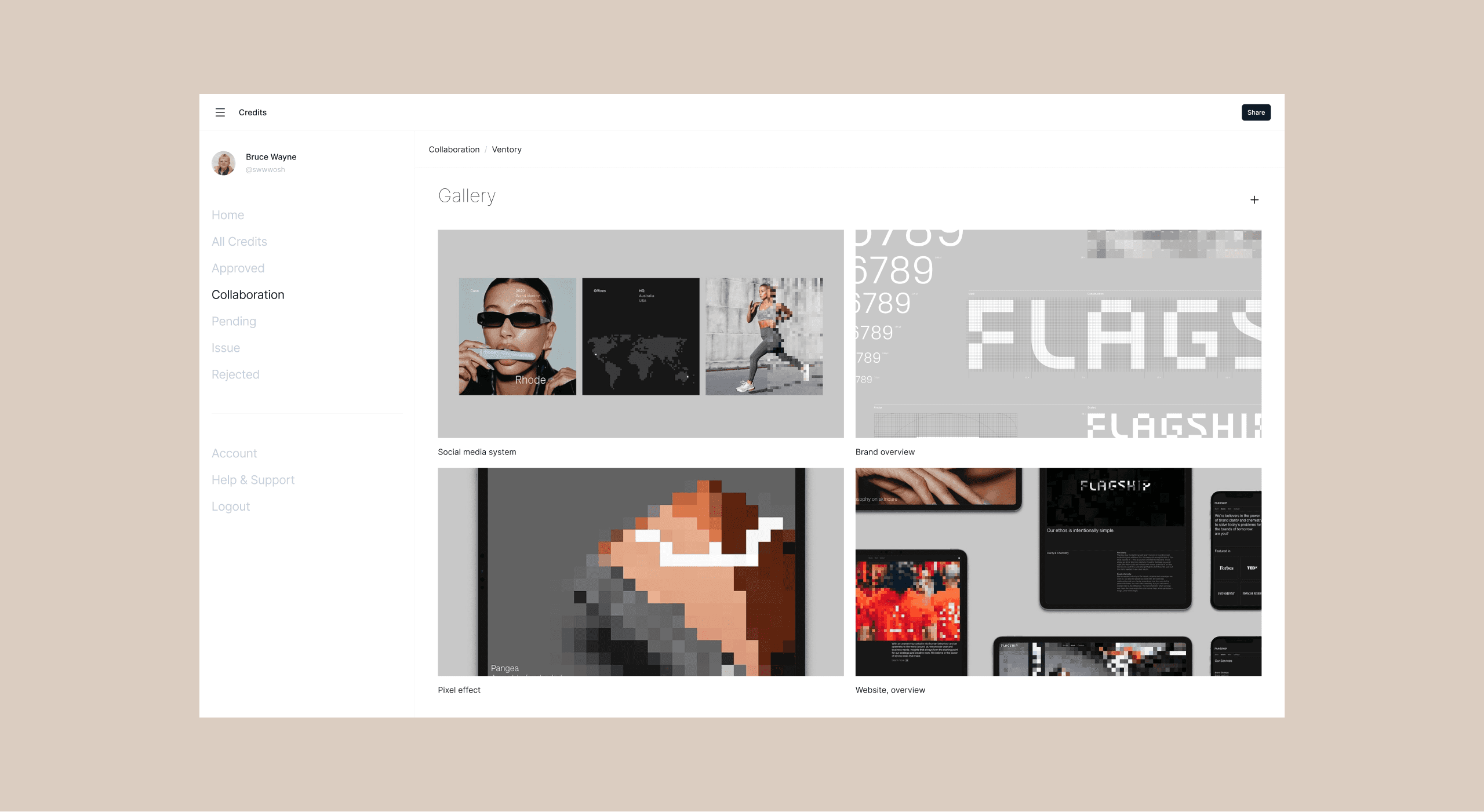
We are excited to introduce Mosaic, the verification layer for the creator economy and the home of Creator ID. Mosaic gives creators a powerful way to verify the content, projects, and work they own, functioning as an IMDb built for modern creators. As AI and digital distribution accelerate, Mosaic ensures creators stay visible, credited, and in control of their work. Our beta launches in January, and joining the waitlist now puts you at the front of what comes next.
Creators Guild of America © 2024